GitHub AI Tools – Open Source AI Solutions for Developers
With the rise of open source AI tools and GitHub AI tools, developers now have access to powerful resources to build, experiment, and deploy AI-driven solutions. Open source AI platforms on GitHub provide a collaborative environment where innovation thrives, offering everything from machine learning frameworks to pre-trained models and AI development kits. This article dives deep into the best GitHub AI tools, explores their benefits, and highlights why open source AI tools are a game-changer for developers. Whether you’re a seasoned AI engineer or just starting with AI dev tools, this guide will help you navigate the vibrant ecosystem of open source AI solutions.
1. Why GitHub is a hub for open source AI tools
GitHub has become the go-to platform for developers worldwide, hosting millions of repositories, including a vast collection of open source AI tools. The platform’s collaborative nature allows developers to contribute to projects, share knowledge, and access cutting-edge AI development tools without the high costs associated with proprietary software.
The power of open source AI platforms
Open source AI platforms on GitHub empower developers to customize tools to their specific needs. Unlike proprietary systems, these platforms are community-driven, meaning they are constantly updated and improved by a global network of contributors. This ensures that open source AI tools remain relevant and adaptable to the latest advancements in AI technology.
Accessibility and affordability
One of the biggest advantages of GitHub AI tools is their accessibility. Developers can access powerful AI dev tools for free or at a minimal cost, making it easier for startups, small businesses, and individual developers to experiment with AI. This democratization of technology fosters innovation and levels the playing field in AI development.
Collaboration and community support
GitHub’s collaborative environment is a cornerstone of its success. Developers can fork repositories, submit pull requests, and engage with communities to refine open source AI platforms. This collaborative spirit ensures that tools are rigorously tested and enhanced, providing reliable solutions for real-world applications.
2. Top GitHub AI tools for developers
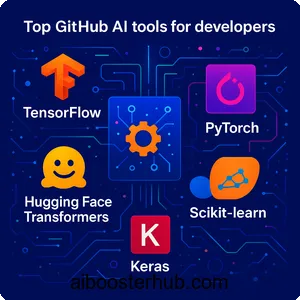
GitHub hosts a plethora of open source AI tools that cater to various aspects of AI development, from machine learning frameworks to natural language processing (NLP) libraries. Below, we explore some of the most popular AI development tools available on GitHub.
TensorFlow
TensorFlow, developed by Google, is one of the most widely used open source AI tools for building machine learning models. Its GitHub repository is a treasure trove of resources, including tutorials, pre-trained models, and community contributions. TensorFlow supports a range of applications, from image recognition to time-series forecasting, making it a versatile choice for developers working on AI dev tools.
PyTorch
PyTorch, backed by Meta AI, is another powerhouse in the world of GitHub AI tools. Known for its dynamic computational graph, PyTorch is favored by researchers and developers for its flexibility and ease of use. The PyTorch GitHub repository offers extensive documentation and community-driven enhancements, making it a top pick for open source AI platforms.
Hugging Face Transformers
For developers focused on NLP, the Hugging Face Transformers library is a must-have. This open source AI tool provides pre-trained models for tasks like text generation, sentiment analysis, and translation. Its GitHub repository is actively maintained, with regular updates and contributions from the AI community, making it a go-to resource for AI development tools.
Scikit-learn
Scikit-learn is a robust machine learning library for Python, widely used for tasks like classification, regression, and clustering. Its GitHub repository is a hub for developers seeking simple yet powerful AI dev tools. With a user-friendly interface and comprehensive documentation, Scikit-learn is ideal for both beginners and experienced developers.
Keras
Keras is a high-level API for building neural networks, designed to simplify the process of creating AI models. Its GitHub repository provides access to a wide range of tutorials and examples, making it a valuable resource for developers looking to leverage open source AI tools for rapid prototyping.
3. Benefits of using open source AI tools
The adoption of open source AI platforms has transformed the way developers approach AI projects. Here are some key benefits of using these tools.
Cost-effectiveness
Unlike proprietary software, open source AI tools are typically free to use, reducing the financial barrier for developers. This allows individuals and organizations to allocate resources to other critical areas, such as data collection or model training.
Flexibility and customization
GitHub AI tools are highly customizable, enabling developers to tailor solutions to specific use cases. Whether you’re building a recommendation system or a computer vision application, open source tools provide the flexibility to adapt to your project’s requirements.
Rapid prototyping and experimentation
With AI development tools available on GitHub, developers can quickly prototype and test ideas. The availability of pre-trained models and reusable code accelerates the development process, allowing for faster iteration and innovation.
Community-driven innovation
The collaborative nature of open source AI platforms fosters innovation. Developers from around the world contribute to these projects, introducing new features, fixing bugs, and sharing best practices. This collective effort ensures that GitHub AI tools remain at the cutting edge of AI technology.
4. How to choose the right GitHub AI tools
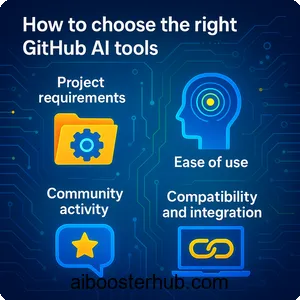
Selecting the right open source AI tools depends on your project’s goals, technical requirements, and team expertise. Here are some factors to consider when choosing AI dev tools from GitHub.
Project requirements
Define the scope of your project before selecting a tool. For example, if you’re working on a computer vision project, tools like TensorFlow or PyTorch may be ideal. For NLP tasks, Hugging Face Transformers is a strong contender.
Ease of use
Consider the learning curve associated with each tool. Libraries like Scikit-learn and Keras are beginner-friendly, while TensorFlow and PyTorch may require more experience. Check the GitHub repository for documentation and community support to gauge ease of use.
Community activity
Active GitHub repositories with frequent updates and contributions are a good sign of a tool’s reliability. Look for repositories with a high number of stars, forks, and recent commits to ensure the tool is well-maintained.
Compatibility and integration
Ensure that the AI development tools you choose are compatible with your existing tech stack. Check for integrations with popular programming languages like Python or frameworks like Flask and Django.
5. Getting started with GitHub AI tools
Ready to dive into the world of open source AI tools? Here’s a step-by-step guide to getting started with GitHub AI tools.
Explore repositories
Start by browsing GitHub for open source AI platforms. Use search terms like “AI tools,” “machine learning,” or “deep learning” to find relevant repositories. Filter by stars or recent activity to discover the most popular and well-maintained projects.
Clone and experiment
Once you’ve identified a promising tool, clone the repository to your local machine. Most GitHub AI tools include a README file with setup instructions. Follow these steps to install dependencies and run sample code.
Contribute to the community
If you find a tool useful, consider contributing to its development. Whether it’s fixing a bug, adding a feature, or improving documentation, your contributions can help enhance open source AI tools for everyone.
Join discussions
Many open source AI platforms have active discussion forums or issue trackers on GitHub. Engage with the community to ask questions, share ideas, or seek help with implementation.
6. Challenges and considerations
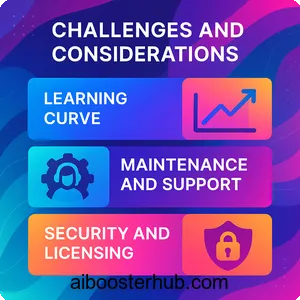
While GitHub AI tools offer numerous benefits, there are some challenges to keep in mind.
Learning curve
Some AI development tools have a steep learning curve, especially for beginners. Investing time in learning the tool’s documentation and experimenting with sample projects can help overcome this hurdle.
Maintenance and support
Not all open source AI tools are actively maintained. Before adopting a tool, check its GitHub repository for recent activity and community support to ensure it’s reliable.
Security and licensing
When using open source AI platforms, pay attention to licensing terms. Some tools may have restrictions on commercial use, so review the license to avoid potential legal issues. Additionally, ensure the tool is secure by checking for vulnerabilities in its dependencies.
7. The future of open source AI tools on GitHub
The future of GitHub AI tools is bright, with the AI community continuing to push the boundaries of what’s possible. As more developers contribute to open source AI platforms, we can expect to see advancements in areas like generative AI, reinforcement learning, and AI ethics. The collaborative nature of GitHub ensures that AI dev tools will remain accessible, innovative, and aligned with the needs of developers worldwide.
Emerging trends
Emerging trends in open source AI tools include the rise of low-code AI platforms, automated machine learning (AutoML), and AI for edge computing. GitHub repositories are already showcasing projects that integrate these technologies, making them accessible to developers of all skill levels.
The role of AI ethics
As AI becomes more pervasive, ethical considerations are gaining prominence. Open source AI platforms are increasingly incorporating tools for bias detection, fairness, and transparency, ensuring that AI solutions are responsible and inclusive.
Scaling innovation
The scalability of GitHub AI tools allows developers to build solutions that can handle large datasets and complex models. As cloud computing and distributed systems evolve, open source AI tools will continue to play a pivotal role in scaling AI innovation.
8. Conclusion
GitHub AI tools and open source AI platforms are revolutionizing the way developers approach AI projects. From powerful frameworks like TensorFlow and PyTorch to specialized libraries like Hugging Face Transformers, these tools offer unmatched flexibility, affordability, and community support. By leveraging AI development tools on GitHub, developers can accelerate innovation, prototype ideas, and contribute to the global AI ecosystem. Whether you’re building a simple machine learning model or a complex AI system, the open source AI tools available on GitHub provide everything you need to succeed. Start exploring today and unlock the full potential of AI development!