AI Business Applications – Transform Your Operations
Artificial Intelligence (AI) is reshaping the business landscape, offering innovative solutions that enhance efficiency, drive growth, and unlock new opportunities. From automating routine tasks to delivering deep insights through data analysis, AI business applications are transforming how organizations operate. This article explores the diverse applications of AI in business, highlighting practical use cases, benefits, and strategies for integration. Whether you’re a small startup or a global enterprise, understanding the use of AI in business can help you stay competitive in a rapidly evolving market.
1. Understanding AI business applications
What are AI business applications?
AI business applications refer to the integration of artificial intelligence technologies into business processes to optimize operations, enhance decision-making, and improve customer experiences. These applications leverage machine learning, natural language processing, computer vision, and other AI techniques to solve complex challenges. The application of AI in business spans industries, from retail and healthcare to finance and manufacturing, offering tailored solutions that address specific needs.
AI is not just a buzzword; it’s a toolset that empowers businesses to work smarter. By analyzing vast datasets, predicting trends, and automating repetitive tasks, AI enables organizations to focus on strategic goals. The use of AI in business is about creating value—whether through cost savings, improved efficiency, or enhanced customer satisfaction.
Why businesses are adopting AI
The adoption of AI applications in business is driven by the need for agility and innovation. Companies face increasing pressure to adapt to changing market dynamics, and AI provides the tools to do so. Key reasons for adoption include:
- Efficiency gains: AI automates time-consuming tasks, freeing up resources for higher-value work.
- Data-driven decisions: AI processes large volumes of data to uncover insights that guide strategy.
- Customer personalization: AI tailors experiences to individual preferences, boosting engagement.
- Competitive advantage: Early adopters of AI can outperform competitors by leveraging cutting-edge technology.
As businesses recognize these benefits, the application of AI in business continues to grow, reshaping industries and redefining operational standards.
2. Key AI applications in business
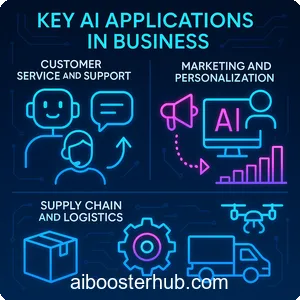
Customer service and support
One of the most prominent applications of AI in business is in customer service. AI-powered chatbots and virtual assistants handle inquiries around the clock, providing instant responses to common questions. These tools use natural language processing to understand customer needs and offer personalized solutions.
For example, AI chatbots can resolve issues like order tracking or account inquiries without human intervention. They also collect data on customer interactions, enabling businesses to refine their offerings. By integrating AI into customer support, companies reduce response times, improve satisfaction, and lower operational costs.
Marketing and personalization
The use of AI in business is revolutionizing marketing by enabling hyper-personalized campaigns. AI analyzes customer behavior, preferences, and purchase history to deliver tailored content. For instance, recommendation engines on e-commerce platforms suggest products based on past purchases, increasing conversion rates.
AI also enhances digital advertising by optimizing ad placements and targeting. Machine learning algorithms predict which audiences are most likely to engage, ensuring marketing budgets are spent effectively. The result is a more engaging customer experience and higher return on investment for marketing efforts.
Supply chain and logistics
AI business applications are transforming supply chain management by improving efficiency and reducing costs. AI-powered tools forecast demand, optimize inventory, and streamline logistics. For example, predictive analytics can anticipate supply chain disruptions, allowing businesses to adjust proactively.
In logistics, AI optimizes delivery routes, reducing fuel costs and improving delivery times. Autonomous vehicles and drones, powered by AI, are also emerging as game-changers in last-mile delivery. These applications of AI in business ensure smoother operations and greater reliability.
3. AI in decision-making and analytics
Data-driven insights
The application of AI in business is particularly powerful in data analytics. AI systems process vast amounts of data to identify patterns, trends, and anomalies that humans might miss. This capability is critical for industries like finance, where AI detects fraudulent transactions, or healthcare, where it predicts patient outcomes.
Businesses use AI to generate actionable insights from customer data, market trends, and operational metrics. For instance, AI can analyze sales data to identify underperforming products, enabling companies to adjust their strategies. The use of AI in business analytics empowers leaders to make informed decisions quickly.
Predictive analytics
Predictive analytics is a cornerstone of AI business applications. By analyzing historical data, AI forecasts future trends, helping businesses plan effectively. Retailers use predictive models to anticipate customer demand, while manufacturers predict equipment failures to prevent downtime.
This proactive approach reduces risks and enhances efficiency. For example, a retailer using AI to forecast holiday sales can stock inventory accordingly, avoiding overstocking or shortages. Predictive analytics is a prime example of how the application of AI in business drives strategic success.
4. Enhancing operational efficiency
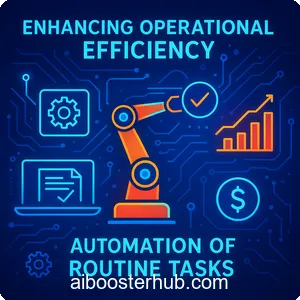
Automation of routine tasks
Automation is a key use of AI in business, particularly for repetitive tasks. AI-powered robotic process automation (RPA) handles tasks like data entry, invoice processing, and payroll management. By automating these processes, businesses reduce errors and free up employees for more creative work.
For example, in accounting, AI tools extract data from invoices and categorize expenses, saving hours of manual work. This efficiency translates into cost savings and allows teams to focus on strategic initiatives.
Process optimization
Beyond automation, AI business applications optimize complex processes. In manufacturing, AI monitors production lines in real-time, identifying bottlenecks and suggesting improvements. Similarly, in project management, AI tools allocate resources efficiently, ensuring projects stay on track.
By streamlining workflows, AI reduces waste and enhances productivity. These improvements are critical for businesses looking to scale without increasing costs disproportionately.
5. Industry-specific AI applications
Healthcare
The application of AI in business is transforming healthcare by improving diagnostics, patient care, and operational efficiency. AI-powered diagnostic tools analyze medical images to detect conditions like cancer with high accuracy. Virtual health assistants schedule appointments and provide patients with personalized advice.
Hospitals also use AI to optimize resource allocation, such as predicting patient admissions to manage staffing levels. These applications of AI in business improve patient outcomes and reduce healthcare costs.
Finance
In the financial sector, AI business applications enhance fraud detection, risk assessment, and customer service. AI algorithms analyze transaction patterns to identify suspicious activity, protecting customers from fraud. In lending, AI assesses creditworthiness by analyzing alternative data sources, enabling fairer loan decisions.
AI also powers robo-advisors, which provide personalized investment advice based on user preferences. These tools make financial services more accessible and efficient.
Retail and e-commerce
Retailers leverage AI applications in business to enhance customer experiences and optimize operations. AI-driven recommendation systems suggest products, increasing sales and customer satisfaction. In inventory management, AI predicts demand to prevent stockouts or overstocking.
Additionally, AI-powered visual search allows customers to upload images and find similar products, creating a seamless shopping experience. These innovations highlight the transformative potential of the use of AI in business.
6. Challenges and considerations
Implementation hurdles
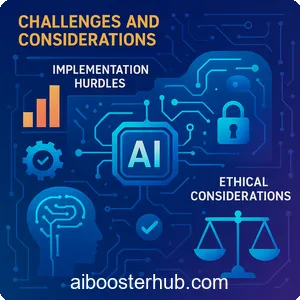
While AI business applications offer immense potential, implementation can be challenging. Businesses may face issues like high initial costs, data privacy concerns, and the need for skilled talent. Integrating AI with existing systems also requires careful planning to avoid disruptions.
To overcome these hurdles, companies should start with small-scale AI projects, ensuring they align with business goals. Partnering with experienced AI vendors can also streamline implementation.
Ethical considerations
The use of AI in business raises ethical questions, particularly around data privacy and bias. AI systems rely on data, and poor-quality or biased data can lead to flawed outcomes. For example, biased hiring algorithms may unfairly exclude candidates.
Businesses must prioritize transparency and fairness in their AI deployments. Regular audits and diverse datasets can help mitigate bias, ensuring AI systems align with ethical standards.
7. Getting started with AI in your business
Steps to adopt AI
Adopting AI business applications requires a strategic approach. Here are practical steps to get started:
- Identify use cases: Pinpoint areas where AI can add value, such as customer service or inventory management.
- Assess data readiness: Ensure you have quality data to fuel AI systems, as data is the backbone of AI success.
- Choose the right tools: Select AI platforms that align with your needs, whether it’s a chatbot, analytics tool, or automation software.
- Start small: Pilot AI projects to test their impact before scaling up.
- Train your team: Equip employees with the skills to work alongside AI technologies.
By following these steps, businesses can integrate applications of AI in business effectively, driving measurable results.
Building a future-ready business
The application of AI in business is not a one-time effort but a journey toward continuous improvement. As AI technologies evolve, businesses must stay agile, experimenting with new tools and refining their strategies. Partnering with AI experts and investing in employee training can ensure long-term success.
By embracing AI business applications, companies can transform their operations, deliver exceptional customer experiences, and stay ahead in a competitive market. The future of business is AI-driven—start exploring its potential today.