AI Tools for Developers – Programming Enhancement
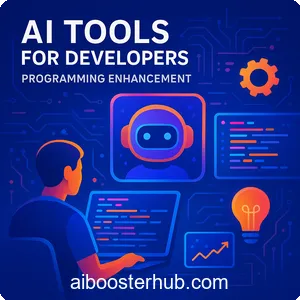
AI tools for developers are no longer futuristic concepts but essential components in modern programming environments. From writing cleaner code to automating repetitive tasks, these tools are reshaping how programmers approach software development. This article explores the best AI tools for programmers, their applications, benefits, and how they elevate the development process. Whether you’re a seasoned coder or just starting, AI tools for software development can help you work smarter and faster.
1. Why AI tools are essential for developers
The integration of AI into software development has revolutionized how developers tackle complex projects. AI tools for developers provide intelligent assistance, enabling programmers to focus on high-level problem-solving rather than mundane tasks. These tools leverage machine learning, natural language processing, and predictive analytics to offer real-time suggestions, optimize code, and even predict potential bugs before they arise.
For instance, AI developer tools can analyze vast amounts of code to identify patterns, suggest optimizations, and ensure adherence to best practices. This not only saves time but also improves code quality. Additionally, AI for development reduces the learning curve for new technologies by providing contextual guidance, making it easier for developers to adopt unfamiliar frameworks or languages. By automating repetitive tasks like debugging, testing, and documentation, these tools allow programmers to dedicate more time to creative and strategic aspects of their projects.
The rise of AI tools for programmers also aligns with the growing complexity of software systems. As applications become more intricate, developers need tools that can keep up with the demands of scalability, security, and performance. AI-driven solutions provide the intelligence and adaptability required to meet these challenges, making them indispensable in modern development workflows.
2. Top AI tools for developers
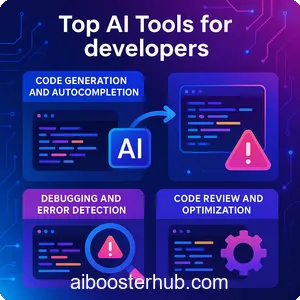
The market is brimming with AI tools for software development, each designed to address specific pain points in the coding process. Below, we explore some of the most impactful tools that developers can integrate into their workflows.
Code generation and autocompletion
One of the most significant advancements in AI developer tools is code generation. Tools like GitHub Copilot use advanced language models to suggest entire lines or blocks of code based on the context of your project. By analyzing your coding patterns and the project’s requirements, these tools provide accurate suggestions that align with your coding style. This not only speeds up development but also reduces errors, especially when working with unfamiliar libraries or frameworks.
Another notable tool is Tabnine, which offers AI-powered autocompletion across multiple programming languages. Unlike traditional autocompletion, Tabnine learns from your codebase and provides highly personalized suggestions, making it a favorite among developers working on complex projects. These AI tools for programmers enhance productivity by minimizing the time spent on writing boilerplate code or searching for syntax.
Debugging and error detection
Debugging is often one of the most time-consuming aspects of software development. AI for development has introduced tools that can identify and suggest fixes for bugs in real-time. DeepCode, for example, uses machine learning to scan codebases for potential vulnerabilities, logical errors, and performance issues. By providing actionable insights, it helps developers address problems before they escalate.
Similarly, tools like CoderPad integrate AI to assist in live coding environments, offering real-time feedback on code quality and potential errors. These tools are particularly valuable for collaborative projects, where maintaining clean and error-free code is critical. By incorporating AI tools for developers, teams can ensure their codebases remain robust and maintainable.
Code review and optimization
Code reviews are essential for maintaining high-quality software, but they can be tedious and prone to human error. AI tools for software development like CodeClimate use AI to analyze code for readability, maintainability, and potential bottlenecks. These tools provide detailed reports and actionable recommendations, helping developers improve their code without relying solely on manual reviews.
For optimization, tools like SonarQube leverage AI to detect code smells and suggest refactoring strategies. This ensures that applications are not only functional but also efficient and scalable. By integrating these AI developer tools, teams can maintain consistent code quality across large projects.
3. AI tools for specific programming tasks
While general-purpose AI tools for programmers are incredibly versatile, some tools are tailored to specific development tasks. These specialized solutions address niche challenges, making them invaluable for certain workflows.
Automated testing
Testing is a critical part of software development, and AI for development has made it more efficient than ever. Tools like Testim use AI to create and maintain automated tests, reducing the time spent on manual testing. By learning from user interactions, Testim generates robust test cases that adapt to changes in the application, ensuring reliable results even as the codebase evolves.
Another powerful tool is Mabl, which uses machine learning to optimize test execution and identify flaky tests. These AI tools for developers streamline the testing process, allowing teams to release software faster without compromising quality.
Documentation and knowledge management
Writing documentation is often a dreaded task for developers, but AI tools for software development are changing that. Tools like Swimm use AI to generate documentation automatically by analyzing codebases and extracting relevant information. This ensures that documentation stays up-to-date with code changes, reducing the maintenance burden.
For knowledge management, tools like Notion AI help developers organize project-related information, such as API references, design specifications, and technical notes. By providing intelligent search and summarization features, these tools make it easier to access critical information during development.
DevOps and deployment
In the realm of DevOps, AI developer tools are simplifying deployment and infrastructure management. Tools like Harness use AI to optimize CI/CD pipelines, predicting potential failures and suggesting improvements. Similarly, Datadog’s AI-driven monitoring capabilities help developers track application performance in real-time, identifying anomalies before they impact users.
These tools demonstrate how AI for development extends beyond coding to encompass the entire software lifecycle, from development to deployment.
4. Benefits of using AI tools in software development
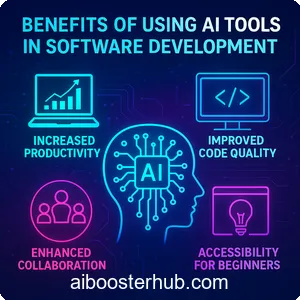
The adoption of AI tools for programmers offers numerous benefits that enhance the development process. These advantages make AI an integral part of modern software engineering.
Increased productivity
By automating repetitive tasks like code writing, debugging, and testing, AI tools for developers allow programmers to focus on creative problem-solving. This leads to faster development cycles and quicker delivery of features, giving teams a competitive edge.
Improved code quality
AI-driven tools provide real-time feedback and suggestions, helping developers write cleaner, more efficient code. By catching errors early and enforcing best practices, these tools reduce technical debt and improve the overall quality of software.
Enhanced collaboration
In team environments, AI tools for software development facilitate better collaboration by standardizing code quality and automating reviews. This ensures that all team members are aligned, regardless of their experience level or coding style.
Accessibility for beginners
For novice developers, AI developer tools lower the barrier to entry by providing contextual guidance and suggestions. This makes it easier to learn new languages or frameworks, empowering beginners to contribute meaningfully to projects.
5. Challenges and considerations when using AI tools
While AI tools for programmers offer significant advantages, they also come with challenges that developers must navigate. Understanding these considerations ensures that teams can maximize the value of AI-driven solutions.
Learning curve
Although AI tools are designed to simplify workflows, some require a learning curve to use effectively. Developers must invest time in understanding how to configure and integrate these tools into their existing processes.
Dependency risks
Over-reliance on AI tools for developers can lead to complacency, where programmers may neglect fundamental coding skills. To mitigate this, developers should use AI as a complement to their expertise rather than a replacement.
Data privacy and security
Many AI tools for software development rely on cloud-based processing, raising concerns about data privacy. Developers working on sensitive projects should ensure that their tools comply with security standards and protect proprietary code.
6. How to choose the right AI tools for your development needs
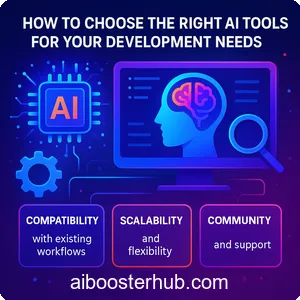
With so many AI developer tools available, selecting the right ones for your project can be daunting. Here are some factors to consider when evaluating tools:
Compatibility with existing workflows
Ensure that the AI tool integrates seamlessly with your development environment, including IDEs, version control systems, and CI/CD pipelines. Tools like GitHub Copilot and Tabnine offer plugins for popular IDEs, making them easy to adopt.
Scalability and flexibility
Choose tools that can scale with your project’s needs. For example, AI for development tools like SonarQube and Harness are designed to handle large, complex codebases, making them suitable for enterprise-level projects.
Community and support
Opt for tools with active communities and robust support channels. This ensures that you can access resources, tutorials, and updates to keep your tools relevant and effective.
7. The future of AI in software development
The role of AI tools for programmers is only set to grow as AI technology advances. Emerging trends like low-code platforms, AI-driven design tools, and autonomous coding agents promise to further transform the development landscape. For instance, tools like Bubble and OutSystems are already using AI to enable developers to create applications with minimal coding, democratizing software development.
Moreover, advancements in natural language processing will make AI developer tools even more intuitive, allowing developers to interact with tools using conversational interfaces. This will streamline workflows and make development more accessible to non-technical users.
As AI continues to evolve, AI tools for software development will become more integrated into every stage of the software lifecycle, from ideation to maintenance. Developers who embrace these tools will be better equipped to build innovative, high-quality software in less time.
8. Conclusion
AI tools for developers are revolutionizing the way software is built, offering unprecedented levels of efficiency, accuracy, and creativity. From code generation to automated testing and deployment, these tools empower programmers to tackle complex challenges with ease. By integrating AI tools for programmers into their workflows, developers can enhance productivity, improve code quality, and stay ahead in the