20 AI Tools for Teachers: Revolutionize Your Classroom
Artificial Intelligence (AI) is transforming education, empowering teachers to create engaging, personalized, and efficient learning experiences. From automating administrative tasks to enhancing student engagement, teacher AI tools and AI tools for students are reshaping classrooms worldwide. This article explores 20 cutting-edge AI tools designed to help educators save time, boost creativity, and foster student success. Whether you’re a seasoned educator or new to teaching, these tools can revolutionize your classroom.
1. Streamlining lesson planning and content creation
Creating engaging lesson plans and educational content can be time-consuming. AI tools simplify this process by generating ideas, curating resources, and tailoring materials to diverse student needs.
MagicSchool
MagicSchool is a versatile platform that helps teachers generate lesson plans, quizzes, and differentiated content. By inputting grade levels or topics, educators can access customized resources aligned with curriculum standards. The tool also offers features like text leveling to adapt materials for various reading abilities, making it ideal for inclusive classrooms.
Eduaide
Eduaide uses AI to create lesson plans, worksheets, and project-based learning activities. Teachers can input specific learning objectives, and the tool generates structured content, saving hours of preparation. Its collaborative features also allow educators to share and refine resources with colleagues.
Canva AI
Canva’s AI-powered design tools, such as Magic Write and Magic Design, enable teachers to create visually appealing presentations, infographics, and classroom posters. With templates tailored for education, teachers can craft professional-looking materials without design expertise.
2. Enhancing student engagement and interaction
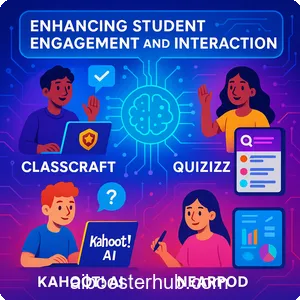
Keeping students engaged is a core challenge for educators. AI tools for students offer interactive and personalized ways to spark curiosity and foster active learning.
Classcraft
Classcraft gamifies the classroom experience, using AI to track student progress and reward positive behaviors. Teachers can create quests or challenges that align with lessons, encouraging collaboration and motivation through a role-playing game format.
Quizizz
Quizizz leverages AI to create adaptive quizzes and games that engage students in real-time. Teachers can customize quizzes or use pre-made ones, with the platform analyzing student responses to provide insights into areas needing improvement.
Kahoot! AI
Kahoot! integrates AI to generate quiz questions based on uploaded documents or topics. Its interactive platform fosters competition and collaboration, making it a favorite for reviewing concepts in a fun, engaging way.
Nearpod
Nearpod’s AI-driven platform allows teachers to create interactive lessons with polls, virtual reality field trips, and collaborative boards. Its real-time feedback helps educators adjust lessons to meet student needs instantly.
3. Personalizing learning experiences
Every student learns differently, and AI tools excel at tailoring education to individual needs, helping teachers address diverse learning styles and abilities.
Khan Academy’s Khanmigo
Khanmigo, an AI tutor from Khan Academy, provides personalized learning support for students. It offers guided practice in subjects like math and science, adapting to each student’s pace and skill level. Teachers can use its analytics to monitor progress and identify gaps.
Smart Sparrow
Smart Sparrow creates adaptive learning pathways that adjust content based on student responses. Teachers can design interactive lessons that cater to individual strengths and weaknesses, ensuring a personalized learning journey.
DreamBox
DreamBox is an AI-powered math platform that adapts lessons to a student’s proficiency level. Its engaging interface and real-time feedback help students build confidence while providing teachers with detailed performance reports.
4. Automating grading and feedback
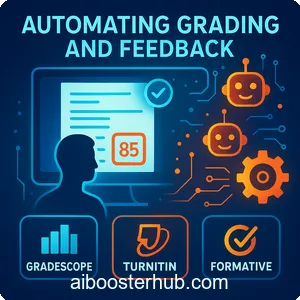
Grading assignments and providing meaningful feedback can be overwhelming. AI tools streamline these tasks, allowing teachers to focus on instruction.
Gradescope
Gradescope uses AI to automate grading for handwritten and digital assignments. It supports a variety of formats, from multiple-choice tests to open-ended questions, and provides consistent, fair feedback while saving time.
Turnitin
Known for plagiarism detection, Turnitin also uses AI to assist with grading and providing constructive feedback. Its writing analysis tools help students improve their work while reducing the teacher’s workload.
Formative
Formative’s AI-driven platform allows teachers to create assessments that are graded automatically. It also provides real-time insights into student performance, enabling educators to offer targeted feedback.
5. Supporting language learning and literacy
AI tools are particularly effective in supporting language acquisition and literacy, benefiting both native speakers and English language learners.
Grammarly
Grammarly’s AI analyzes student writing, offering suggestions for grammar, clarity, and style. Teachers can use it to provide detailed feedback or integrate it into writing assignments to foster independent improvement.
Duolingo for Schools
Duolingo’s AI-powered platform personalizes language learning for students. Teachers can track progress, set goals, and assign exercises, making it a valuable tool for language classrooms.
Read&Write
Read&Write by Texthelp uses AI to support literacy with features like text-to-speech, vocabulary aids, and translation. It’s especially helpful for students with learning disabilities or those learning English as a second language.
6. Facilitating classroom management and organization
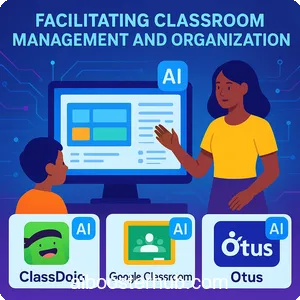
Effective classroom management is key to a productive learning environment. AI tools help teachers stay organized and maintain a positive classroom dynamic.
ClassDojo
ClassDojo uses AI to track student behavior and engagement, allowing teachers to reward points for positive actions. Its communication features also enable seamless parent-teacher interactions.
Google Classroom with AI integrations
Google Classroom integrates with AI tools like Google’s Smart Reply and Smart Compose to streamline communication and assignment management. Teachers can organize tasks, share resources, and provide feedback efficiently.
Otus
Otus combines AI-driven analytics with classroom management tools. It helps teachers track student progress, manage assignments, and create data-driven instructional plans.
7. Encouraging creativity and critical thinking
AI tools can inspire students to think creatively and develop problem-solving skills through innovative projects and activities.
CoSpaces Edu
CoSpaces Edu allows students to create virtual reality worlds and animations using AI-assisted design tools. Teachers can integrate coding and storytelling, fostering creativity and technical skills.
Synthesia
Synthesia’s AI generates professional-quality videos from text, enabling teachers and students to create engaging presentations or tutorials. It’s a powerful tool for project-based learning and creative expression.
8. Conclusion
The integration of teacher AI tools and AI tools for students is revolutionizing education by making teaching more efficient and learning more engaging. From streamlining lesson planning to personalizing student experiences, these 20 tools offer practical solutions for modern classrooms. By embracing these technologies, educators can save time, foster creativity, and empower students to reach their full potential. Explore these tools to discover how they can transform your teaching and create a dynamic, inclusive learning environment.