Which AI is Best? Complete Comparison of Top AI Tools
In the fast-paced world of artificial intelligence, one question dominates: which AI is best for your needs? Whether you’re a content creator seeking inspiration, a developer streamlining code, or a marketer crafting visuals, the right AI tool can revolutionize your workflow. With countless options available, choosing the best AI can feel daunting.
This comprehensive guide compares top AI tools across key categories, highlighting their strengths, features, and ideal use cases to help you decide what is the best AI to use. Let’s dive into the world of AI and discover which AI is the best for you.
1. Introduction to AI Tools
Why AI tools matter today
Artificial intelligence has evolved from a futuristic concept into a practical asset, powering everything from chatbots that mimic human conversation to image generators that create art from simple prompts. The question of what is the best AI arises because these tools are now accessible to everyone—freelancers, businesses, and hobbyists alike. They leverage advanced large language models (LLMs) and diffusion techniques to process natural language, generate content, and automate tasks, making them indispensable in modern workflows.
How to choose the right AI tool
Selecting which AI is best depends on your goals. Are you drafting reports, debugging code, or designing visuals? Each tool excels in specific areas, and understanding their strengths is key. This article evaluates top AI tools based on functionality, ease of use, and versatility, ensuring you find the best AI for your unique needs.
2. AI Tools for Text Generation
Overview of text-based AI
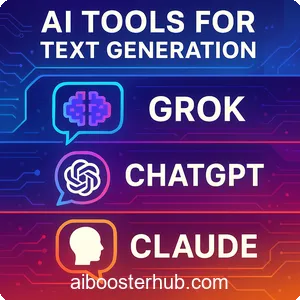
Text generation tools are among the most popular AI applications, capable of drafting emails, articles, or even creative stories. These tools use LLMs to understand context and produce human-like text, making them ideal for writers, marketers, and professionals seeking efficiency.
Grok: Conversational intelligence
Grok, created by xAI, is a standout for its conversational approach. Designed to provide helpful and truthful answers, it excels in tasks like brainstorming, answering complex queries, and generating concise text. Its strength lies in its ability to adapt to diverse topics, from technical explanations to creative prompts, making it a versatile choice for users wondering which AI is the best for dynamic text needs.
ChatGPT: The all-purpose conversationalist
ChatGPT, developed by OpenAI, is a household name in AI. It shines in generating coherent, context-aware text for everything from blog posts to customer service scripts. Its user-friendly interface and broad knowledge base make it a go-to for those asking what is the best AI for general-purpose text creation.
Claude: Ethical and precise
Anthropic’s Claude emphasizes safety and precision, offering a polished alternative for professional writing. It’s particularly strong in crafting structured content, such as reports or legal documents, appealing to users prioritizing clarity and ethical AI design.
3. AI Tools for Coding Assistance
Why coders need AI
For developers, AI tools can accelerate coding, debug errors, and suggest optimizations. These tools understand programming languages and frameworks, making them essential for anyone asking which AI is the best for software development.
GitHub Copilot: Your coding sidekick
Powered by OpenAI, GitHub Copilot integrates seamlessly with IDEs, offering real-time code suggestions and autocompletion. It’s ideal for developers working on complex projects, as it can generate entire functions or debug code snippets, saving hours of manual work.
CodeLlama: Open-source coding power
Developed by Meta AI, CodeLlama is an open-source option for coders who prefer flexibility. It supports multiple programming languages and excels in generating clean, efficient code, making it a strong contender for those wondering what is the best AI to use for open-source projects.
Tabnine: AI for every codebase
Tabnine uses machine learning to predict and suggest code across various languages and editors. Its lightweight design and focus on privacy make it a favorite for developers seeking a fast, secure coding assistant.
4. AI Tools for Image and Video Generation
The rise of visual AI
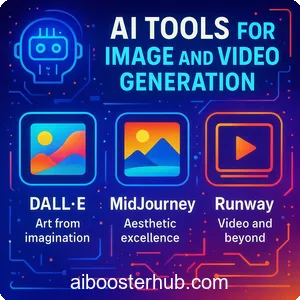
AI-powered image and video generators have transformed creative industries, enabling users to produce stunning visuals from text prompts. These tools are perfect for marketers, designers, and content creators exploring which AI is the best for visual content.
DALL·E: Art from imagination
OpenAI’s DALL·E is renowned for generating high-quality images from detailed text descriptions. Whether you need surreal artwork or realistic product mockups, DALL·E’s versatility makes it a top choice for creative professionals.
MidJourney: Aesthetic excellence
MidJourney specializes in producing visually striking, artistic images with a focus on aesthetic quality. It’s a favorite among designers and artists who prioritize style and want to know what is the best AI for creating unique visuals.
Runway: Video and beyond
Runway goes beyond static images, offering tools for video editing, generation, and animation. Its intuitive interface and powerful features make it a strong option for creators asking which AI is the best for multimedia projects.
5. AI Tools for Data Analysis and Insights
AI in data-driven decisions
Data analysis AI tools help businesses and researchers process vast datasets, uncover patterns, and generate insights. These tools are critical for anyone wondering what is the best AI to use for data-driven decision-making.
Tableau AI: Visual analytics
Tableau integrates AI to simplify data visualization and predictive analytics. Its user-friendly dashboards make it accessible for non-technical users, while its robust features appeal to data scientists.
Google BigQuery ML: Scalable insights
Google BigQuery ML enables users to build and deploy machine learning models within a cloud-based data warehouse. It’s ideal for large-scale data analysis, offering speed and scalability for enterprises.
H2O.ai: Automated machine learning
H2O.ai focuses on automated machine learning (AutoML), allowing users to create models without deep coding expertise. Its flexibility makes it a strong choice for those exploring which AI is the best for accessible data science.
6. Comparing Key Features
Ease of use
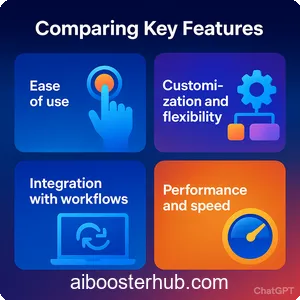
Not all AI tools are created equal when it comes to user experience. ChatGPT and Grok offer intuitive interfaces for beginners, while tools like CodeLlama and BigQuery ML cater to users with technical expertise. Consider your comfort level when deciding what is the best AI for you.
Customization and flexibility
Customization varies widely. MidJourney allows fine-tuned control over image styles, while Claude offers structured text outputs. For coders, Tabnine and Copilot provide tailored suggestions based on your codebase, making them highly adaptable.
Integration with workflows
Integration is crucial for seamless adoption. GitHub Copilot excels in IDE integration, while Tableau and Runway connect easily with existing business or creative tools. Evaluate how well an AI tool fits into your current processes to determine which AI is the best.
Performance and speed
Performance matters, especially for time-sensitive tasks. DALL·E and MidJourney deliver fast image generation, while Grok and ChatGPT provide near-instant text responses. For data analysis, BigQuery ML’s cloud-based processing ensures rapid insights.
7. Making Your Choice
Aligning AI with your goals
The question of which AI is best ultimately hinges on your objectives. Content creators may lean toward ChatGPT or Claude for text, while developers might prefer Copilot or CodeLlama. Designers will find DALL·E or MidJourney transformative, and data analysts may gravitate toward Tableau or H2O.ai.
Testing and experimenting
Many AI tools offer free tiers or trials, allowing you to test them before committing. Experimenting with multiple tools can clarify what is the best AI to use for your specific needs, ensuring you invest in the right solution.
Future-proofing your choice
AI evolves rapidly, so choosing a tool with active development and community support is wise. Tools like Grok, backed by xAI, and open-source options like CodeLlama are likely to stay relevant, offering long-term value.
8. Conclusion
Deciding which AI is the best requires understanding your needs and exploring the strengths of each tool. From text generation with Grok and ChatGPT to coding with Copilot and CodeLlama, image creation with DALL·E and MidJourney, or data analysis with Tableau and BigQuery ML, there’s an AI for every task. By comparing their features, ease of use, and integration capabilities, you can confidently choose what is the best AI to use for your projects. Start experimenting today and unlock the full potential of AI to elevate your work.