AI platform comparison – Choose the right solution
The world of artificial intelligence (AI) is evolving rapidly, and choosing the right AI platform can make or break your project. Whether you’re a developer, business owner, or tech enthusiast, an AI platform comparison is essential to identify the best AI for your specific needs. With countless options available, from top AI platforms to niche tools, navigating this landscape can feel overwhelming. This comprehensive guide dives deep into the popular AI platforms, comparing their features, strengths, and use cases to help you make an informed decision.
With AI transforming industries like healthcare, finance, marketing, and more, understanding the differences between platforms is critical. This article breaks down the key aspects of AI comparison, offering insights into their capabilities, pricing, ease of use, and scalability. By the end, you’ll have a clear picture of which platform aligns with your goals, whether you’re building a chatbot, analyzing data, or developing cutting-edge machine learning models.
1. Why AI platform comparison matters
The AI ecosystem is vast, with platforms catering to different industries, skill levels, and budgets. Conducting an AI platform comparison ensures you select a tool that aligns with your project’s requirements. Choosing the wrong platform can lead to wasted resources, limited scalability, or poor performance. Here’s why comparing top AI platforms is crucial:
Understanding your needs
Every AI project has unique demands. Some platforms excel in natural language processing (NLP), while others are better suited for computer vision or predictive analytics. By comparing platforms, you can pinpoint the one that matches your use case, whether it’s automating customer service, generating content, or processing large datasets.
Balancing cost and value
AI platforms vary widely in pricing, from free tiers to enterprise-level subscriptions. An AI comparison helps you weigh the cost against the value provided, ensuring you get the most bang for your buck. For example, a small business might prioritize affordability, while a large corporation may need advanced features and scalability.
Scalability and flexibility
As your project grows, your AI platform must keep up. Some platforms offer seamless scalability, while others are rigid. Comparing popular AI platforms helps you assess which ones can grow with your needs, whether you’re a startup or an established enterprise.
Ease of use
Not all AI platforms require coding expertise. Some are designed for beginners with drag-and-drop interfaces, while others cater to data scientists with advanced technical requirements. An AI platform comparison highlights which tools are user-friendly and which demand specialized skills.
2. Key factors in AI platform comparison
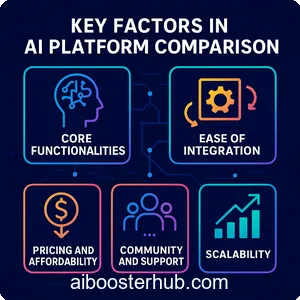
When evaluating top AI platforms, several factors come into play. These criteria help you determine the best AI for your project. Below, we explore the most critical aspects to consider during an AI comparison.
Core functionalities
The heart of any AI platform lies in its capabilities. Does it support machine learning, deep learning, NLP, or computer vision? Some platforms, like TensorFlow, focus on building custom models, while others, like Dialogflow, specialize in conversational AI. Assess the platform’s strengths to ensure they align with your goals.
Ease of integration
Integration with existing systems is a must. Whether you’re incorporating AI into a website, mobile app, or enterprise software, the platform should offer APIs, SDKs, or pre-built connectors. Platforms like Google Cloud AI and AWS AI provide robust integration options, making them popular among developers.
Pricing and affordability
Cost is a significant factor in choosing an AI platform. Free tiers, like those offered by Google Colab or IBM Watson’s trial versions, are great for testing, but enterprise-grade solutions often come with hefty price tags. Compare pricing models to find a platform that fits your budget without compromising on features.
Community and support
A strong community and reliable support can save you time and frustration. Platforms like TensorFlow and PyTorch have active communities with extensive documentation, tutorials, and forums. Look for platforms with responsive customer support and a wealth of online resources.
Scalability
Scalability is critical for projects with growth potential. Cloud-based platforms like Microsoft Azure AI and AWS AI are designed to handle large-scale deployments, while smaller platforms may struggle with high volumes of data or users. Ensure the platform can scale as your needs evolve.
Customization and flexibility
Some platforms offer pre-built models for quick deployment, while others allow for extensive customization. If you need tailored solutions, platforms like TensorFlow or PyTorch give you the flexibility to build from scratch, while tools like H2O.ai offer ready-to-use models for faster implementation.
3. Top AI platforms to consider
The market is flooded with popular AI platforms, each with its strengths and weaknesses. Below, we compare some of the best AI for various use cases, highlighting their key features to aid your AI platform comparison.
Google Cloud AI
Google Cloud AI is a powerhouse for machine learning and data analytics. With tools like AutoML and BigQuery ML, it caters to both beginners and experts. Its strength lies in its integration with Google’s ecosystem, making it ideal for businesses already using Google services.
- Pros: Robust NLP and computer vision tools, scalable infrastructure, extensive documentation.
- Cons: Steeper learning curve for beginners, higher costs for enterprise features.
- Best for: Businesses needing scalable, cloud-based AI solutions.
Microsoft Azure AI
Microsoft Azure AI offers a wide range of tools, from cognitive services to machine learning studios. Its drag-and-drop interface is beginner-friendly, while its advanced features appeal to seasoned developers. Azure’s integration with Microsoft 365 makes it a go-to for enterprises.
- Pros: User-friendly interface, strong enterprise integration, flexible pricing.
- Cons: Limited free tier, occasional complexity in setup.
- Best for: Enterprises and developers seeking a versatile platform.
AWS AI
Amazon Web Services (AWS) AI is a leader in cloud-based AI, offering tools like SageMaker for machine learning and Lex for conversational AI. Its scalability and integration with AWS services make it a top choice for large-scale projects.
- Pros: Highly scalable, extensive service offerings, strong security features.
- Cons: Can be expensive, complex for small teams.
- Best for: Large organizations with complex AI needs.
TensorFlow
TensorFlow, developed by Google, is an open-source platform for building custom machine learning models. It’s highly flexible and widely used for research and production-level applications.
- Pros: Open-source, highly customizable, strong community support.
- Cons: Steep learning curve, requires coding expertise.
- Best for: Developers and researchers building custom models.
PyTorch
PyTorch, backed by Meta AI, is another open-source platform popular among researchers. Its dynamic computational graph makes it easier to experiment with compared to TensorFlow.
- Pros: Flexible, beginner-friendly for coders, strong research community.
- Cons: Less suited for production environments compared to TensorFlow.
- Best for: Researchers and developers focused on experimentation.
IBM Watson
IBM Watson is known for its NLP capabilities, powering chatbots and virtual assistants. Its enterprise-grade solutions are ideal for businesses looking to implement AI quickly.
- Pros: Strong NLP tools, enterprise-focused, good support.
- Cons: Expensive, limited free tier.
- Best for: Businesses needing conversational AI or analytics.
4. Use cases for AI platforms
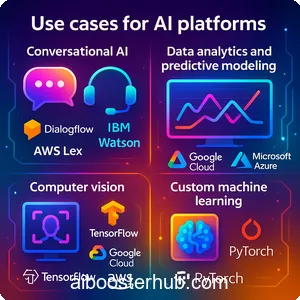
Different popular AI platforms excel in specific use cases. Understanding these applications can guide your AI comparison and help you choose the best AI for your project.
Conversational AI
For chatbots and virtual assistants, platforms like Dialogflow, IBM Watson, and AWS Lex shine. These tools offer pre-built NLP models, making it easy to create responsive, human-like conversational agents.
Data analytics and predictive modeling
If your project involves analyzing large datasets or predicting trends, Google Cloud AI and Microsoft Azure AI are top contenders. Their tools like BigQuery ML and Azure Machine Learning simplify complex data tasks.
Computer vision
For image recognition or video analysis, TensorFlow, Google Cloud AI, and AWS Rekognition are excellent choices. They provide pre-trained models and APIs for tasks like object detection and facial recognition.
Custom machine learning
Developers building bespoke models often turn to TensorFlow or PyTorch. These platforms offer the flexibility to create tailored solutions for unique challenges, from healthcare diagnostics to autonomous vehicles.
5. How to choose the best AI platform
With so many top AI platforms available, selecting the right one requires a structured approach. Here’s a step-by-step guide to streamline your AI platform comparison.
Define your goals
Start by outlining your project’s objectives. Are you building a chatbot, analyzing data, or creating a recommendation system? Clear goals will narrow down your options.
Assess your technical expertise
Consider your team’s skill level. If you lack coding expertise, opt for platforms with no-code or low-code options, like Microsoft Azure AI or Google Cloud AI. For advanced users, TensorFlow or PyTorch may be better.
Evaluate integration needs
Ensure the platform integrates seamlessly with your existing tech stack. Check for API availability, compatibility with your programming languages, and support for your cloud provider.
Compare costs
Review pricing structures, including free tiers, pay-as-you-go models, and enterprise plans. Balance cost with the features you need to avoid overspending.
Test with prototypes
Many platforms offer free trials or sandboxes. Build prototypes to test performance, ease of use, and scalability before committing.
6. Challenges in AI platform selection
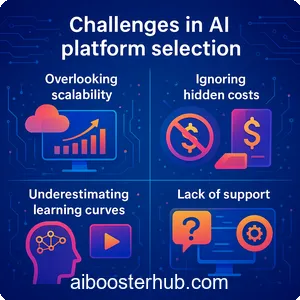
Even with a thorough AI comparison, challenges can arise when choosing a platform. Here are common pitfalls and how to avoid them.
Overlooking scalability
A platform that works for a small project may not scale for larger deployments. Always consider future growth when evaluating popular AI platforms.
Ignoring hidden costs
Some platforms advertise low starting prices but charge for additional features or usage. Read the fine print to understand the full cost.
Underestimating learning curves
Complex platforms like TensorFlow require significant time to master. Ensure your team has the resources to learn and implement the platform effectively.
Lack of support
Choosing a platform with poor documentation or support can lead to delays. Prioritize platforms with active communities and reliable customer service.
7. Future trends in AI platforms
The AI landscape is constantly evolving, and staying ahead requires awareness of emerging trends. Here’s what to watch for in top AI platforms.
No-code and low-code growth
No-code platforms are democratizing AI, allowing non-technical users to build models. Expect more platforms to offer drag-and-drop interfaces and pre-built templates.
Edge AI
As IoT devices proliferate, edge AI—running models on devices rather than the cloud—is gaining traction. Platforms like TensorFlow Lite and AWS IoT Greengrass are leading this shift.
Ethical AI
With growing concerns about bias and privacy, platforms are prioritizing ethical AI frameworks. Look for tools that emphasize transparency and fairness.
Integration with generative AI
Generative AI, like text and image generation, is becoming a staple. Platforms are integrating these capabilities, making them accessible for content creation and design.
8. Conclusion
Choosing the best AI for your project requires a thorough AI platform comparison. By evaluating factors like functionality, scalability, cost, and ease of use, you can identify the platform that aligns with your goals. Whether you opt for the robust capabilities of Google Cloud AI, the flexibility of TensorFlow, or the enterprise-grade solutions of IBM Watson, the right choice will empower your project to succeed.
The top AI platforms offer something for everyone, from startups to global enterprises. By understanding your needs and exploring popular AI platforms, you’ll be well-equipped to harness the power of AI. Start your AI comparison today and unlock the potential of artificial intelligence for your business or project.